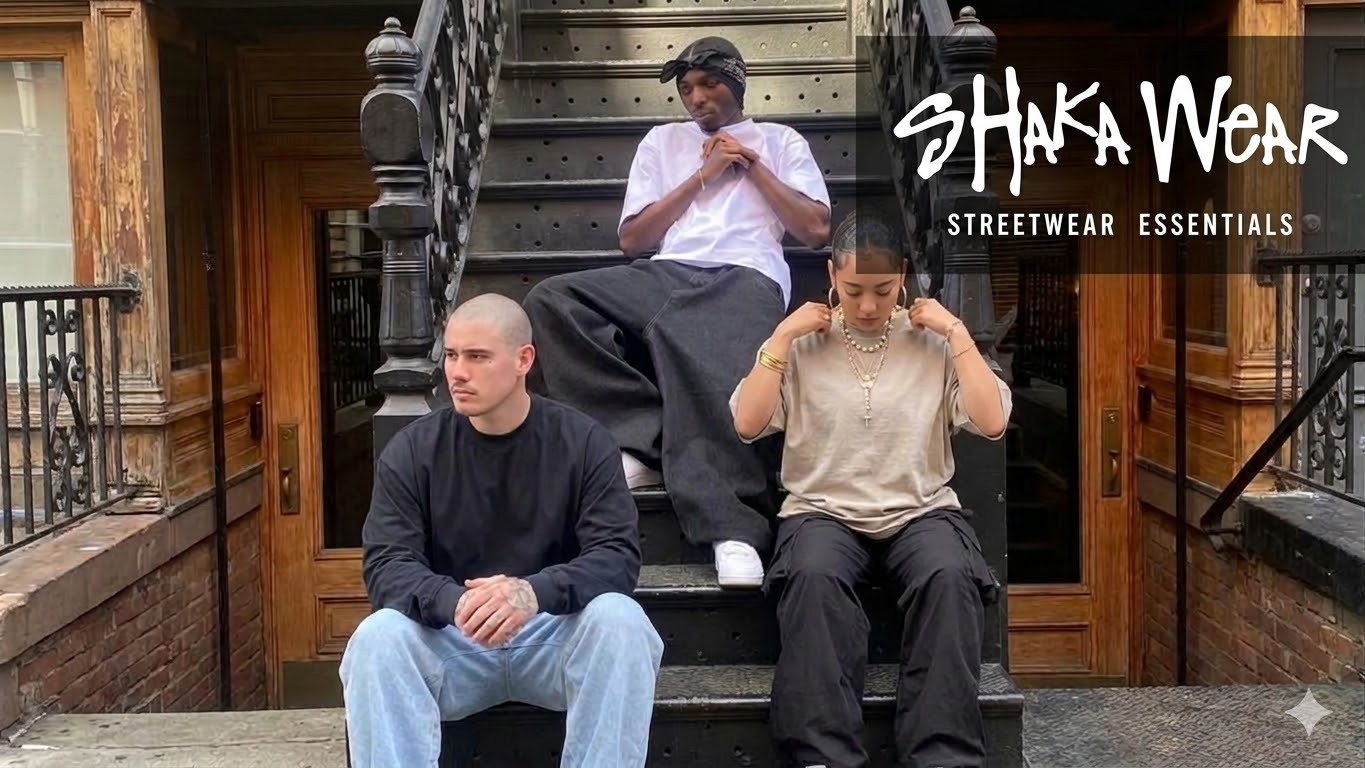
Shaka Wear Heavyweight T-Shirts: Why Oversized Blanks Are Dominating Streetwear in 2026
There's a shift happening in blank apparel that every decorator, merch brand, and wholesale buyer in Canada needs to pay attention to. The fitted, lightweight t-shirt that dominated merch tables and brand drops for the better part of a decade is losing ground — fast. In its place, a heavier, boxier, deliberately oversized silhouette has taken over, and it shows no signs of slowing down. We saw that trend at www.fabrik.ca on time!
At the center of that shift is Shaka Wear.
If you haven't stocked the Shaka Wear Max Heavyweight yet, this post will tell you exactly why you should — and how to position it for your clients and customers who are chasing the streetwear aesthetic in 2026.
Where the oversized trend came from
To understand why heavyweight blanks are having such a moment, you have to look at where streetwear has been heading culturally over the past few years.
The influence of Japanese streetwear — brands like Neighborhood, Wtaps, and Visvim — combined with the continued dominance of American labels like Fear of God Essentials, has fundamentally shifted what the streetwear consumer considers a premium product. The silhouette is no longer slim and body-conscious. It's roomy, substantial, and intentional. A shirt that looks like it was made to be oversized, not just sized up.
At the same time, the DIY and independent brand explosion that accelerated through the early 2020s created a generation of merch brand founders who needed a blank that could hold its own aesthetically against the established names they were competing with. A standard 150g tee doesn't cut it when your customer has grown up wearing 280g+ garments from their favourite brands.
Heavyweight blanks fill that gap. And Shaka Wear does it better than almost anyone at the wholesale price point.
What makes Shaka Wear Max Heavyweight different
The Shaka Wear Max Heavyweight Garment Dye t-shirt (SHGDSS) is not a standard blank with a heavier fabric weight slapped on it. It's designed from the ground up for the oversized streetwear market, and the details reflect that.
Fabric weight. The Max Heavyweight comes in at approximately 7.5 oz — substantially heavier than the Bella Canvas 3001 at 4.2 oz or even the Gildan Heavy Cotton at 5.3 oz. That weight is immediately noticeable the moment you pick it up. It drapes differently, it sits differently on the body, and it communicates quality before a single word on the label is read.
The garment dye process. Unlike most blanks that are dyed at the yarn stage before construction, the Max Heavyweight is dyed after the garment is fully assembled. This creates the characteristic slight colour variation and lived-in texture that the streetwear market actively seeks out. No two dye lots are perfectly identical — and that's exactly the point. It reads as artisanal rather than mass-produced, even at wholesale quantities.
The silhouette. The cut is boxy and cropped with a dropped shoulder — the same architectural shape you see on the racks of premium streetwear retailers. It's not accidental. Shaka Wear built this blank specifically to mirror the silhouette that the market was paying a significant premium for at retail, and made it accessible at wholesale pricing.
The colour palette. The Max Heavyweight is available in a range of washed, muted tones — faded blacks, dusty pinks, washed olives, vintage whites — that align with the palette preferences of the streetwear consumer. These are not the bright, saturated colours of a traditional event shirt catalogue. They're fashion colours, and they're chosen deliberately.
Who is buying oversized heavyweight blanks in 2026
Understanding the end consumer helps you sell this product more effectively to your decorator and brand clients.
Independent merch brands and streetwear labels are the primary driver of heavyweight blank demand. These are founders, often between 20 and 35, building brands that they intend to sell at $55–90 CAD per piece at retail. They need a blank that justifies that price point visually and physically. The Shaka Wear Max Heavyweight does exactly that.
Music artists and touring merchandise have embraced the heavyweight oversized aesthetic almost universally. The era of the thin concert tee is largely over for anyone playing to a fashion-conscious audience. Artists and their merchandise managers are specifically requesting this silhouette because it photographs better, sells better at the merch table, and aligns with what their audience is already wearing.
Skateboarding and action sports brands have always leaned heavier and boxier than mainstream apparel, and the current cultural moment has brought that aesthetic into the mainstream. Brands in this space are natural Shaka Wear customers. Surf shops coast to coast in Canada also look toward Fabrik.ca for their Shaka Wear inventory.
High school and university students building micro-brands represent a growing and often overlooked segment. The barrier to entry for launching a small apparel brand has never been lower, and this generation of brand founders is extremely aware of fabric weight and silhouette. They know what they want, and they'll find a supplier who carries it.
Decoration considerations for heavyweight garment-dyed blanks
This is where your decorator clients need the most guidance, because heavyweight garment-dyed blanks behave differently than standard blanks during the decoration process.
Screen printing on garment dye. The slightly uneven surface texture created by the garment dye process means that ultra-fine detail work and tight halftones will behave differently than they would on a smooth Bella Canvas 3001. Bold graphics, distressed prints, and vintage-inspired artwork are actually enhanced by this texture — the slight irregularity adds to the handmade aesthetic. Advise your clients to lean into that rather than fight it.
DTG printing considerations. DTG on garment-dyed fabric requires careful pre-treatment calibration because the dye process affects how the fabric absorbs pre-treatment solution. The colour variation inherent to garment dye also means that the same DTG file may produce slightly different results across a batch — again, something that reads as a feature rather than a flaw in the streetwear context, but worth communicating to clients upfront.
Embroidery. The heavyweight construction actually makes the Shaka Wear Max Heavyweight an excellent embroidery blank — the dense fabric provides a stable base that doesn't pucker or distort under embroidery hoops the way lighter fabrics can. Left-chest logo embroidery in particular looks extremely clean on this blank.
Puff ink and specialty techniques. The heavyweight oversized streetwear aesthetic pairs exceptionally well with specialty print techniques — puff ink, cracked vintage effects, discharge printing. If your shop offers these techniques, the Shaka Wear Max Heavyweight is a natural upsell conversation.
How to position this blank to your clients
If you're a decorator or distributor, the conversation with your clients about upgrading to heavyweight blanks is easier than you might think — because the demand is already there. Your clients have likely already seen this silhouette on brands they follow and admire. Your job is to connect the dots.
Lead with the end consumer experience. Show them the weight difference in person if you can — hand someone a 7.5 oz garment next to a 4.2 oz one and the conversation largely sells itself. Then talk about price point justification: a client who is currently selling printed tees at $35 CAD can credibly move to $55–65 CAD with a blank like this, which changes their margin structure entirely.
For clients who are hesitant about the higher blank cost, frame it as a product line expansion rather than a replacement. They don't need to abandon their existing blanks — they need a premium tier option for the part of their catalogue that speaks to the fashion-forward customer.
Why exclusivity matters here
One thing worth knowing about Shaka Wear in the Canadian market: broad distribution is limited. That means when your clients source this blank through Fabrik.ca, they're not getting a commodity product that their competitors can easily find elsewhere. That scarcity has real value for brand builders who care about differentiation — and increasingly, the best merch brand clients do care about that. We are the only ones supplying Shaka Wear blanks as no minimum to everyone in Canada.
www.fabrik.ca Is the ONLY distributor of Shaka Wear blanks to everyone at no minimum in Canada.
Stock it before your competitors do
The heavyweight oversized trend is not a flash in the pan. The cultural drivers behind it — the influence of Japanese streetwear, the premium casual aesthetic, the independent brand explosion — are structural shifts in how the streetwear consumer thinks about what a t-shirt should feel like. This silhouette has moved from trend to expectation for a significant and growing segment of the market.
Decorators and brand builders who get ahead of it now — who have the blank in their sample collection, who can show it to clients, who understand how to decorate and position it — will have a meaningful advantage over those who wait.
The Shaka Wear Max Heavyweight Garment Dye t-shirt is available now through Fabrik with Canadian pricing and domestic shipping. Browse the full colour range and current stock here → [https://fabrik.ca/en-ca/produc...]
Looking for decoration advice specific to heavyweight garment-dyed blanks? Get in touch with our team → [https://fabrik.ca/en-ca/produc...]
Explore our full Shaka Wear catalogue → [https://fabrik.ca/en-ca/produc...]
Always here for you, live contact at 1-877-281-0499 or [email protected]