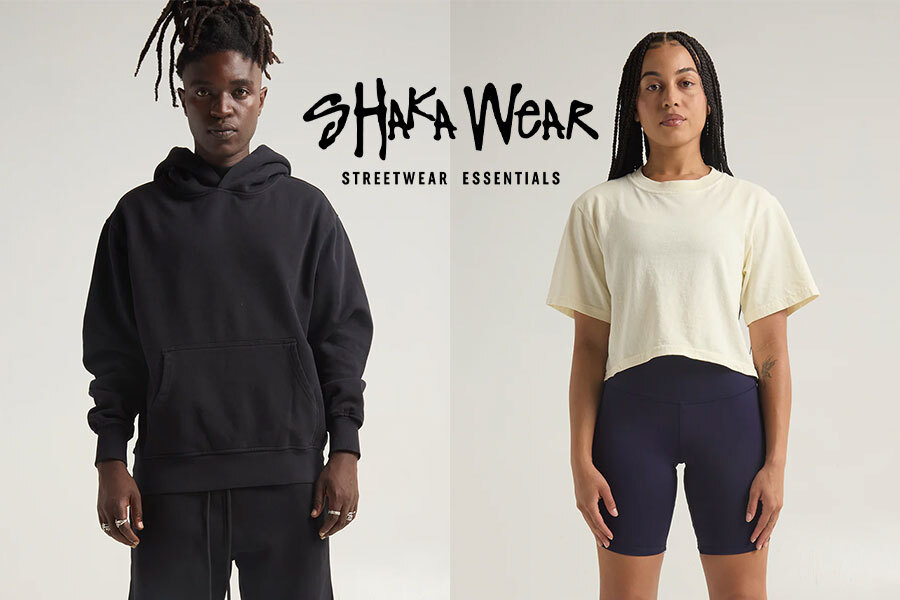
Shaka Wear Heavyweight T-Shirts: Why Oversized Blanks Are Dominating Streetwear in 2026
There is a shift happening in blank apparel that every decorator, merch brand founder, and wholesale buyer in Canada needs to pay attention to. The fitted, lightweight t-shirt that dominated merch tables and brand drops for the better part of a decade is losing ground — fast. In its place, a heavier, boxier, deliberately oversized silhouette has taken over, and it shows no signs of slowing down.
At the center of that shift is Shaka Wear.
If you have not yet stocked the Shaka Wear Max Heavyweight in your inventory or sample collection, this post will tell you exactly why you should — and how to position it for your clients and customers who are chasing the streetwear aesthetic in 2026. Canadian customers used to have to import Shaka Wear apparel from the US, now it's finally available exclusively at Fabrik.ca in Canada!
Where the oversized trend came from
To understand why heavyweight blanks are having such a dominant moment, you have to look at where streetwear has been heading culturally over the past several years.
The influence of Japanese streetwear — brands like Neighborhood, Wtaps, and Visvim — combined with the continued dominance of American labels like Fear of God Essentials, has fundamentally shifted what the streetwear consumer considers a premium product. The silhouette is no longer slim and body-conscious. It is roomy, substantial, and intentional. A shirt that looks like it was designed to be oversized rather than simply ordered in a larger size.
At the same time, the DIY and independent brand explosion that accelerated through the early 2020s created a generation of merch brand founders who needed a blank that could hold its own aesthetically against the established names they were competing with. A standard 150 gsm tee does not cut it when your customer has grown up wearing 280 gsm and above garments from their favourite brands.
Heavyweight blanks fill that gap. And Shaka Wear does it better than almost anyone at the wholesale price point.
Who is Shaka Wear and why does it matter for Canadian buyers
Shaka Wear is a Los Angeles-based blank apparel brand that has built its entire identity around heavyweight, oversized construction for the streetwear and fashion market. Unlike brands that have added heavyweight options as an extension of an existing commodity catalogue, Shaka Wear was built from the ground up for this specific market segment — and that focus shows in every aspect of their product design.
The brand has achieved significant traction in the American decorated apparel market over the past several years, and the demand from Canadian decorators and merch brands has been growing steadily as the streetwear aesthetic has deepened its hold on the Canadian youth and fashion market.
The most important thing for Canadian buyers to understand about Shaka Wear is availability. Domestic Canadian distribution of Shaka Wear has historically been extremely limited — most Canadian buyers who wanted the brand were forced to order cross-border, navigating USD pricing, import duties, and extended shipping timelines. Fabrik's decision to carry Shaka Wear domestically is a genuine competitive advantage for the decorators and brand founders we supply — it means you can access this blank with Canadian pricing, no cross-border complications, and domestic shipping timelines rather than the week-plus waits that cross-border sourcing typically requires.
The Shaka Wear Max Heavyweight Garment Dye T-Shirt (SHGDSS): a complete breakdown
The Shaka Wear Max Heavyweight Garment Dye t-shirt is the style that has driven the brand's reputation and is the primary reason Canadian decorators and merch brands are asking about Shaka Wear. Here is a complete breakdown of what makes this blank genuinely different.
Fabric weight: the first thing you notice
The Max Heavyweight comes in at approximately 7.5 oz — 254 gsm — which places it significantly above the mid-weight standard tier that most buyers are accustomed to working with. To put that in context, the Bella Canvas 3001 is 4.2 oz and the Gildan Heavy Cotton is 5.3 oz. The Shaka Wear Max Heavyweight is 40–80% heavier than those familiar reference points.
That weight is immediately and dramatically apparent the moment you pick up the garment. It does not feel like a t-shirt that happens to be heavy — it feels like a garment that was designed to be substantial, where the weight is a core product feature rather than an incidental specification. This is the tactile experience that the streetwear consumer responds to, and it is what justifies the higher retail price that premium streetwear brands charge for heavyweight product.
The garment dye process: why colour and texture matter
Unlike most blank apparel brands that dye their fabric before the garment is cut and sewn, Shaka Wear's Max Heavyweight Garment Dye is dyed after the garment is fully assembled. This post-construction dyeing process creates the distinctive characteristics that make garment-dyed blanks so visually compelling — the slight colour variation across the fabric surface, the subtle fading at seams and stress points, and the overall lived-in quality that reads as authentic and artisanal rather than mass-produced.
The garment dye process also contributes to the soft, broken-in hand feel of the Max Heavyweight. The tumbling and washing that occurs during the dye process pre-softens the heavyweight cotton in a way that raw fabric dyeing does not — the result is a 7.5 oz garment that feels substantially softer than its weight suggests at first handling.
Every garment that comes out of the dye process is slightly unique — the colour variation between individual pieces and between dye lots is a feature of the garment dye process, not a flaw. This characteristic is part of what the streetwear market values about garment-dyed product, and it is important to communicate this to clients and end customers who are encountering garment-dyed blanks for the first time.
The silhouette: built for the streetwear market
The cut of the Shaka Wear Max Heavyweight is boxy and oversized with a dropped shoulder construction — the same architectural silhouette that you see on premium streetwear brands selling similar products at retail for significantly higher prices. This is not a standard t-shirt that happens to be made from heavy fabric. The proportions, the shoulder placement, and the body dimensions are all designed specifically to produce the oversized, intentional silhouette that the streetwear consumer expects at this price point and aesthetic tier.
For merch brand founders, this silhouette is critical. The visual difference between a design printed on a standard fitted blank and the same design printed on the Shaka Wear Max Heavyweight is immediately apparent — the boxy, dropped-shoulder cut makes the finished garment read as premium streetwear rather than decorated commodity apparel, regardless of the decoration quality.
The colour palette: fashion colours for a fashion market
The Max Heavyweight is available in a range of washed, muted, and vintage-influenced tones — faded blacks, dusty pinks, washed olives, vintage whites, earthy browns, and similar colourways that align with the palette preferences of the streetwear and fashion consumer. These are not the bright, saturated colours of a standard event shirt catalogue. They are deliberate fashion colours that communicate aesthetic intentionality before the decoration is even considered.
The colour palette is a direct result of the garment dye process — the pigment dye chemistry and the washing and softening treatments naturally produce washed, lived-in tones that pure yarn-dyed colours cannot replicate. For merch brands building a colour story for their collection, the Shaka Wear Max Heavyweight colour range provides exactly the palette that the current market is responding to.
Pricing and margin opportunity for Canadian buyers
At Fabrik, the Shaka Wear Max Heavyweight Garment Dye t-shirt is available from $16.09 CAD per unit — Canadian pricing with no cross-border complications and domestic shipping from our Canadian warehouses.
At that price point, the margin opportunity for merch brands and decorators is genuinely compelling. A decorated Shaka Wear Max Heavyweight can credibly retail between $55 and $85 CAD in the streetwear market — and for established brands with strong followings, prices above $85 CAD are achievable. Even at the conservative end of that retail range, the margin structure on a Shaka Wear program is significantly better than what most commodity or mid-premium blank programs deliver.
For decorators quoting clients on streetwear-positioned projects, the Shaka Wear Max Heavyweight is the blank that allows you to have a conversation about premium pricing and premium margins — rather than competing on cost per unit against commodity blanks.
Who is buying oversized heavyweight blanks in 2026
Understanding the end consumer helps you sell this product more effectively to your decorator and brand clients.
Independent merch brands and streetwear labels are the primary driver of heavyweight blank demand. These are founders, often between 20 and 35, building brands they intend to sell at $55–90 CAD per piece at retail. They need a blank that justifies that price point visually and physically. The Shaka Wear Max Heavyweight does exactly that — and it does it at a wholesale price that leaves viable margin at those retail prices.
Music artists and touring merchandise have embraced the heavyweight oversized aesthetic almost universally. The era of the thin concert tee is largely over for anyone playing to a fashion-conscious audience. Artists and their merchandise managers are specifically requesting this silhouette because it photographs better, sells better at the merch table, and aligns with what their audience is already wearing.
Skateboarding and action sports brands have always leaned heavier and boxier than mainstream apparel, and the current cultural moment has brought that aesthetic into the mainstream. Brands in this space are natural Shaka Wear customers who have been waiting for domestic Canadian availability.
High school and university students building micro-brands represent a growing and often overlooked segment. The barrier to entry for launching a small apparel brand has never been lower, and this generation of brand founders is extremely aware of fabric weight and silhouette. They know what they want, they have seen the Shaka Wear aesthetic on brands they follow, and they will find the supplier who carries it domestically.
Established brands expanding into heavyweight:
Perhaps the most significant demand signal for Canadian wholesale buyers is the number of existing decorator clients and brand customers who are not streetwear specialists but who are adding a heavyweight oversized option to their existing lineup because their customers are asking for it. A brand that has been printing on Bella Canvas 3001 for five years is not abandoning that blank — they are adding a Shaka Wear option for the customer who wants something heavier and wants to spend more. Overall customers are extremely loyal to this brand, we have customers ordering around 2000$ to 5000$ a week of Shaka Wear!
Decoration considerations for the Shaka Wear Max Heavyweight
The heavyweight garment-dyed construction of the Shaka Wear Max Heavyweight creates specific decoration considerations that are worth understanding before putting this blank on the press or through a DTG machine.
Screen printing on Shaka Wear:
The heavyweight construction provides exceptional stability under screen print pressure — the dense fabric does not pucker or distort even on large print areas, which is a meaningful advantage for decorators who work with oversized graphic applications that can cause movement and registration problems on lighter blanks.
The slightly open, textured surface created by the garment dye process means that ultra-fine detail work and tight halftones will behave differently than they would on a smooth, yarn-dyed blank like the Bella Canvas 3001. Fine-line detail can appear slightly softer on the garment-dyed surface — an effect that, when embraced deliberately, produces exactly the vintage and distressed print aesthetic that the streetwear market actively seeks. Designs that are intentionally distressed, textured, or vintage-inspired are actually enhanced by the Shaka Wear surface.
For bold graphic work, oversized logo prints, and text-based designs — the most common applications for this blank — Shaka Wear screen prints beautifully. Plastisol inks are the standard choice and perform well. Water-based inks produce exceptional results on this blank due to the 100% cotton construction — the soft-hand and vintage aesthetic of water-based printing aligns perfectly with the garment dye look and many decorators find that water-based on Shaka Wear produces their most striking finished products.
Discharge printing — which removes the dye from the fabric rather than printing on top of it — produces particularly interesting and distinctive results on garment-dyed blanks like the Shaka Wear Max Heavyweight. Because the surface dye is a pigment applied to already-constructed fabric rather than a fibre-reactive dye, discharge chemistry interacts with it in ways that can produce beautiful bleached and vintage effects that are genuinely difficult to replicate on standard blanks. For decorators with discharge capabilities, this is worth experimenting with on Shaka Wear.
DTG printing on Shaka Wear:
DTG on garment-dyed fabric requires careful pre-treatment calibration. The pigment dye on the surface of the fabric affects how the pre-treatment solution absorbs and bonds, which in turn affects colour accuracy and ink adhesion in the printed area. The colour variation inherent to the garment dye process means that the same DTG file may produce slightly different results on different units within the same batch — a characteristic that experienced DTG operators learn to manage through careful pre-treatment application and press calibration.
For dark Shaka Wear colourways specifically — the faded blacks and deep washed tones that are most popular in the streetwear market — DTG pre-treatment needs to be applied consistently and evenly across the print area. Uneven pre-treatment on the textured garment dye surface produces visible variation in the printed area. This is manageable with proper protocol development and is standard practice for any experienced DTG operation, but it is worth flagging for decorators who are printing this blank for the first time.
Embroidery on Shaka Wear:
The heavyweight cotton construction makes the Shaka Wear Max Heavyweight an excellent embroidery blank — the dense fabric provides exceptional stability under the embroidery hoop, resisting the puckering and distortion that lighter fabrics can experience under embroidery tension. Left-chest logo embroidery looks particularly clean and dimensional on this blank because the dense fabric provides a stable, flat surface that supports the embroidery thread well.
The slightly textured surface of the garment-dyed fabric also contributes to the premium, artisanal aesthetic of embroidered designs in a way that smooth blanks do not — the combination of the washed fabric texture and the dimensional quality of embroidery creates a finished product that reads as genuinely handcrafted and premium.
How to position Shaka Wear to your clients
If you are a decorator or distributor, the conversation about upgrading clients to heavyweight blanks is easier than you might think — because the demand from the end consumer side is already there. Your clients have likely already seen this silhouette on brands they follow. Your job is to make the connection between what they want to achieve and the blank that gets them there.
Lead with the physical experience. If you have samples in your showroom or can send a sample to a client before their next project conversation, do it. The tactile difference between a Shaka Wear Max Heavyweight and a standard blank sells itself in a way that no amount of specification language can match. When someone picks up a 7.5 oz garment for the first time alongside a 4.2 oz alternative, the conversation about why they should pay more for the better blank becomes simple.
Lead with the retail price math. For merch brand clients who are currently operating on standard commodity or mid-premium blanks, the conversation about Shaka Wear is not just about quality — it is about margin structure. A brand currently selling decorated Bella Canvas tees at $45 CAD can credibly move a decorated Shaka Wear tee at $65–75 CAD. That additional $20–30 of retail revenue on a blank that costs $6–8 more at wholesale is a straightforward and compelling business case that most clients respond to immediately.
Lead with the reference point. Almost every client in the streetwear and fashion space has brands they admire and aspire to compete with. Ask them which brands' heavyweight product they have seen or worn. Then show them the Shaka Wear Max Heavyweight and explain that this is the blank that decorators and wholesale buyers use to access that aesthetic at the wholesale level. Connecting the blank to the end-product vision the client already has is the most efficient sales conversation you can have.
Position it as an additive rather than a replacement. Most clients who would benefit from Shaka Wear are not ready to replace their entire product line with heavyweight blanks — they want to add a heavyweight option to their existing lineup. Positioning the Shaka Wear Max Heavyweight as a premium tier addition rather than a replacement for their existing blanks reduces the resistance to trying it and allows clients to test the market response before committing to a full collection pivot.
Why exclusivity matters for Canadian buyers
One aspect of Shaka Wear in the Canadian market that deserves specific attention is the limited distribution landscape. Unlike major commodity brands that are available from multiple Canadian distributors, Shaka Wear's Canadian availability is genuinely limited — which means that decorators and brand founders who source through Fabrik are not working with a blank that their direct competitors can easily access through a competing domestic supplier.
For brand builders who care about product differentiation — and increasingly the most sophisticated merch brand clients do care about this — being able to tell their end customers that the blank they are using is not widely available domestically adds a layer of exclusivity to the product story that commodity blanks simply cannot offer.
This limited availability is worth communicating explicitly to your clients when you introduce them to Shaka Wear. It is not just a better blank — it is a blank that most of their Canadian competitors cannot easily access, which is a genuine competitive advantage in a market where blank selection is increasingly a brand differentiator.
Stock it before your clients ask for it
The most effective way to introduce Shaka Wear to your client base is not to wait until a client specifically asks for a heavyweight garment-dyed blank — it is to have a sample in your showroom or sample collection before the conversation happens, so that when the topic of premium streetwear blanks comes up naturally, you already have the answer in your hands.
The decorators and distributors who are most successfully building their Shaka Wear business in Canada are the ones who ordered samples proactively, put them in front of clients during project planning conversations, and let the physical quality of the blank generate the demand rather than trying to explain the concept in words.
The Shaka Wear Max Heavyweight Garment Dye t-shirt is available now through Fabrik with Canadian pricing and domestic shipping. Browse the full colour range and current stock availability here → [https://fabrik.ca/en-ca/produc...]
Looking for decoration advice specific to heavyweight garment-dyed blanks? Contact our team → [email protected] or by phone at 1-877-281-0499 Explore our full Shaka Wear catalogue → [https://fabrik.ca/en-ca/produc...] Browse all heavyweight and streetwear blanks → [https://fabrik.ca/en-ca/produc...]